DE

EN

LT

LV

EE

RUS

PL
Beesproducts.eu
Bees, Bee Products and Health
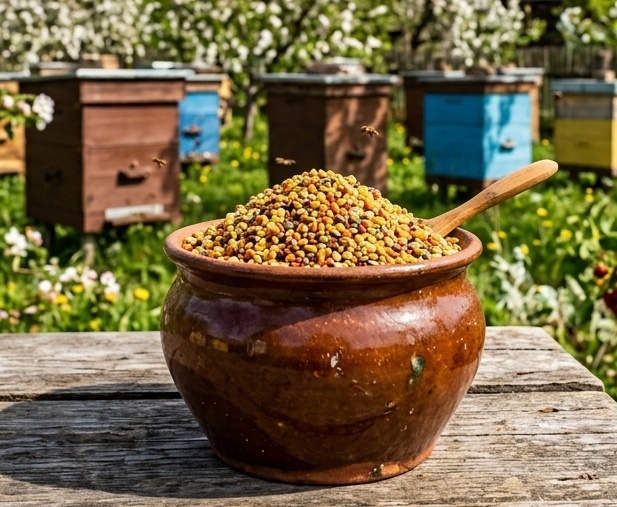
1. What is bee pollen?Bee pollen consists of plant pollen grains collected by worker bees from flowers.
2. How do bees collect it?While gathering nectar, the bee becomes covered in pollen. She then uses her legs to brush the pollen into special "baskets" (corbiculae) on her hind legs. To keep the pollen grains together, the bee moistens them with saliva and nectar, forming small pellets.
3. Why are they different colors?The color of the pollen depends on the plants from which it was collected. Different flowers produce different colored pigments: apple blossom pollen can be yellow, dandelion pollen is bright orange, while other plants can yield purple, green, or even black pollen. This reflects biological diversity.
4. What do bees do with pollen?Pollen is the bees' primary source of protein. Without it, the apiary could not survive.
5. Production of bee bread.The brought-in pollen is packed into honeycomb cells, flattened, and covered with honey. This initiates a fermentation process that transforms the pollen into "bee bread." This form is more easily digestible and contains even more vitamins.
6. Bee food.Bee bread is essential for feeding the larvae, and young bees also consume it to produce "royal jelly," which is used to feed the queen bee.
7. Nutritional value of pollen.It is one of the most concentrated, nutritionally fully balanced natural foods. It is rich in proteins, essential amino acids, carbohydrates, fatty acids, minerals (iron, calcium, magnesium, potassium), vitamins (A, E, D, C, and B group), enzymes, and antioxidants.
8. What are the benefits for humans: An energy boost.Bee pollen helps overcome fatigue, increases endurance, and provides energy, making it popular among athletes and people engaged in intense mental or physical work.
9. Immune system boost.An abundance of antioxidants and vitamins helps the body fight off infections and viruses, strengthening the immune system.
10. Anti-inflammatory effect.Pollen can help reduce inflammatory processes in the body, which is important for fighting chronic diseases.
11. Antibacterial effect.Some studies suggest that pollen can eliminate certain bacteria and fungi.
12. Effects on the skin.Due to its high antioxidant content, pollen can help slow down aging processes and maintain healthy skin.
13. Better digestion.Enzymes and prebiotics help maintain a healthy gut microflora and improve digestion.
14. Heart health.Pollen can help regulate cholesterol and triglyceride levels in the blood, which is important for the prevention of cardiovascular diseases.
15. Prostate health.Some studies show that pollen can be beneficial for the prevention of prostate enlargement (benign prostatic hyperplasia).
16. How to consume bee pollen?
Fresh or dried: Consume 1–2 teaspoons per day, preferably in the morning.
Chewing is important: For the body to better absorb the nutrients, the pollen needs to be thoroughly chewed or dissolved in a small amount of water, honey, or yogurt.
Start gradually: Since some people can be allergic, it is recommended to start with a very small dose and monitor the body's reaction.
Allergy: If you are allergic to airborne pollen, consult a doctor before consuming bee pollen.